



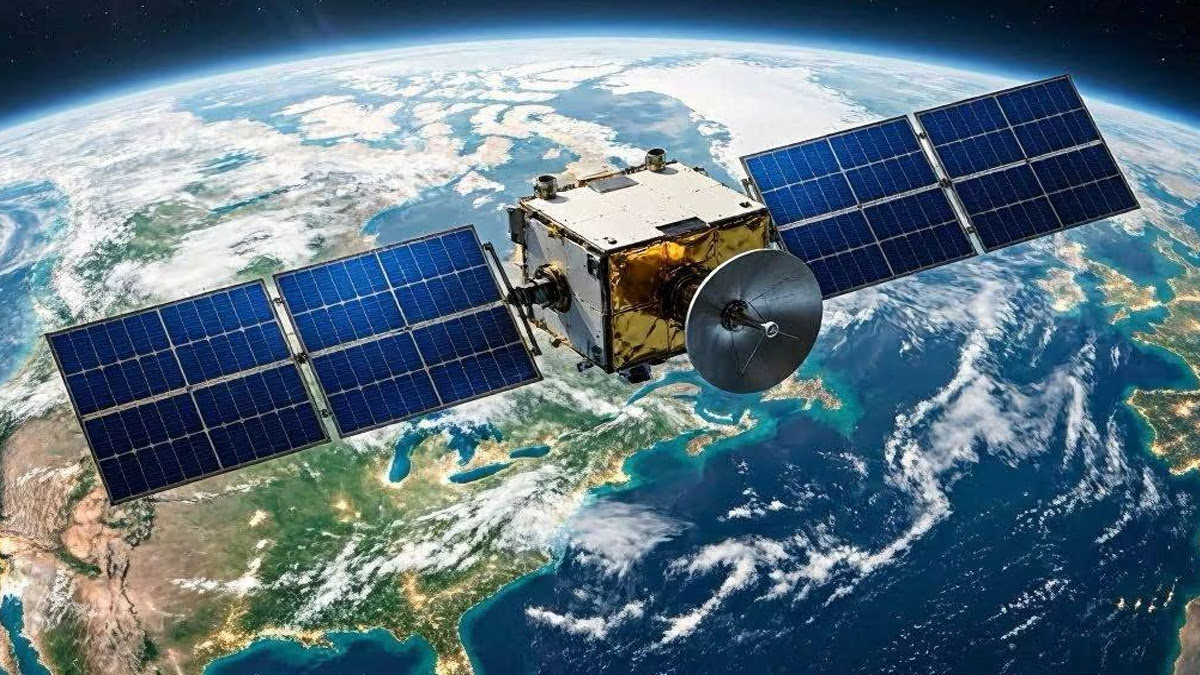
CALIFORNIA: Google plans to test its custom artificial intelligence chips in space as part of an experimental project that could eventually lead to orbital data centers.
The company plans to send a test satellite into orbit aboard SpaceX’s Transporter-18 rideshare mission, scheduled for October 1, 2026.
The mission is part of Project Suncatcher, Google’s effort to explore whether space-based computing can help meet the growing demand for AI processing power.
Google has reportedly been designing the custom chips for the project since 2022.
Satellite to Carry Four Google TPUs
The prototype satellite was developed in partnership with Earth-imaging company Planet.
It will carry four of Google’s custom-designed Tensor Processing Units (TPUs), which are specialised chips built for AI workloads.
The satellite will remain in space for about one year.
During the mission, engineers will study how the hardware performs under harsh space conditions. This includes exposure to radiation and the challenge of cooling electronic components in a vacuum without conventional airflow.
Before approving the hardware for launch, engineers conducted thermal vacuum chamber tests.
The tests exposed the TPUs to temperature changes and atmospheric conditions similar to those expected during the satellite’s time in orbit.
Google Plans Further Space Tests
Google also plans to study satellite-to-satellite laser communications in future stages of Project Suncatcher.
The company intends to launch two additional Planet-built satellites in 2027.
Those satellites will test high-precision optical links between orbital nodes.
Google is exploring whether space-based AI accelerators, solar arrays and computing systems could eventually complement data center infrastructure on Earth.
The project could help the company assess whether networks of satellites can provide additional computing capacity as demand for AI processing continues to increase.