



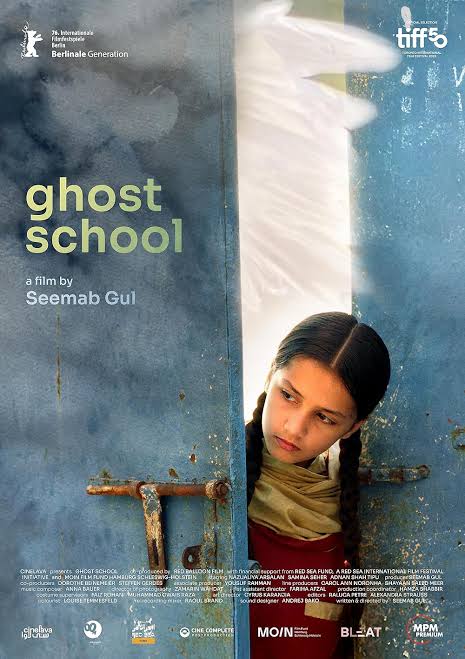
Ghost School blocked from screening in Sindh
A critically acclaimed movie that calls attention to the issue of ‘ghost schools’ will not screen in the province where filmmakers shot it. The Sindh Board of Film Censors refused to grant the film a censor certificate.
British-Pakistani filmmaker Seemab Gul wrote, directed and produced Ghost School. The film has already bagged the Best Director award at the UK Asian Film Festival.
The film debuted at the Toronto International Film Festival (TIFF). It also received a nomination in the Best Film category. It later screened at the Red Sea Film Festival in Jeddah. The film earned critical praise and an honourable mention at the Indian Film Festival of Los Angeles for its “exceptional social realism and restrained storytelling”.
It also won a special award at the Asian African Latin American Film Festival.
Film highlights girls’ education
The film highlights the issue of girls’ education. It follows the story of 10-year-old Rabia, played by Nazualiya Arsalan.
The protagonist wants to pursue her studies. However, a rumour that the school is haunted leads local authorities to close it. The teacher and the village elder use the rumour as an excuse to shut the school.
Filmmaker questions censor board decision
FILMMAKER SAYS NO REASONING GIVEN FOR WITHHOLDING PERMISSION; MINISTER INSISTS CENSOR BOARD MUST HAVE HAD ‘A VALID REASON’
The filmmakers shot the movie in Chashma Goth and another village on the outskirts of Karachi.
Talking to Dawn, Ms Gul said she was shocked by the censor board’s decision. She maintained that her film did not contain anything controversial. She said it only dealt with issues surrounding education. She added that the federal censor board and authorities in Punjab had raised no objections. Only Sindh found it “not suitable”.
According to a letter from the secretary of the Sindh Board of Film Censors, “After careful examination and due deliberation, the board found the film not suitable for public exhibition.”
“I have no information what the board members found objectionable in the film,” she said. She added that the board’s correspondence gave no reasons.
Dawn reached out to Sindh Board of Film Censors Chairman Khalid Bin Shaheen but received no response.
Minister defends the board
When Dawn approached Sindh Culture Minister Syed Zulfiqar Ali Shah for comment, he said the censor board was an autonomous body. He added that its 15-member board had the authority to issue film licences. According to him, the board must have had valid reasons for rejecting the licence application.
Financial impact on the filmmaker
The decision deals a major blow to Ms Gul. She financed the film and is paying for its distribution from her own pocket.
If Karachi cinemas do not screen the film, Ms Gul could face a significant financial loss. She told Dawn that she had written to the censor board after it rejected the application. However, she received no response.
“There are around 15,000 ghost schools in Sindh. It’s a critical issue,” she said, while appealing to the censors to reconsider their decision.
Tahir Siddiqui in Karachi also contributed to this report.