



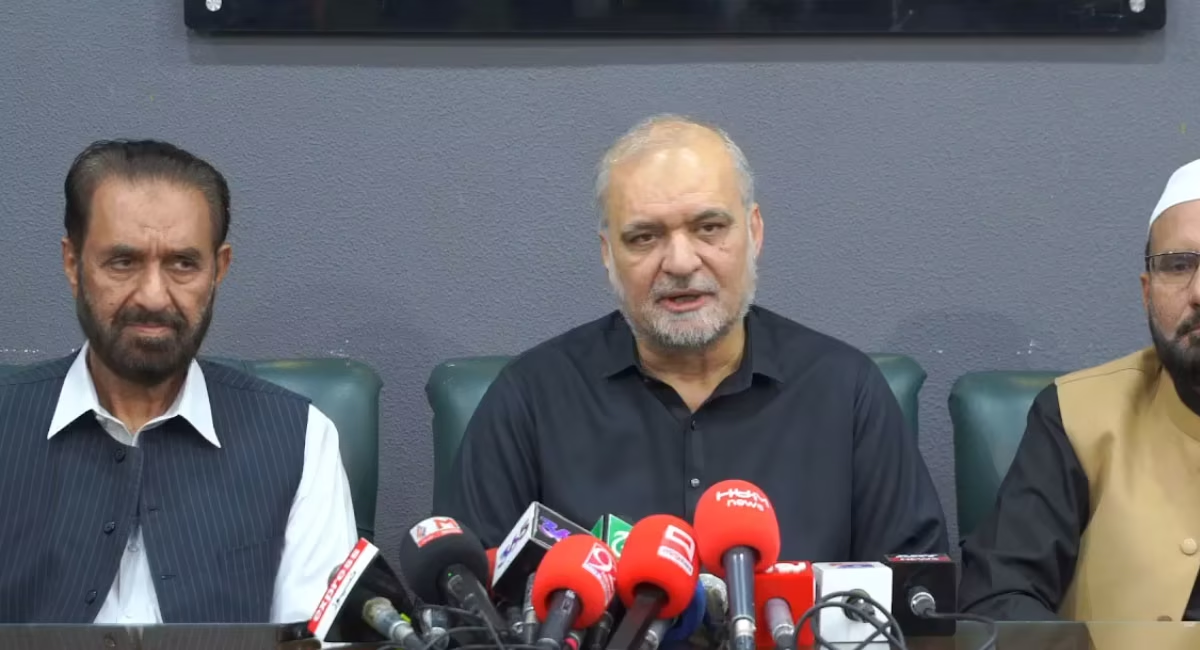
LAHORE: Jamaat-e-Islami (JI) Pakistan chief Hafiz Naeemur Rehman on Saturday rejected Pakistan Peoples Party (PPP) Chairman Bilawal Bhutto-Zardari’s claim that his party enjoyed a public mandate in Karachi, alleging that people across Sindh were increasingly dissatisfied with the PPP.
“People across Sindh, not just Karachi, dislike the PPP,” Hafiz Naeem said, accusing the party of manipulating local government elections and using undemocratic means to secure political control in the city.
He claimed that the PPP had suffered a crushing defeat in Karachi’s local government elections, finishing third or fourth in terms of seats and votes, while Jamaat-e-Islami had emerged as the leading party.
The JI chief alleged that the PPP manipulated constituency delimitations to serve its interests and subsequently secured seats through rigging.
He also accused the party of buying the support of 32 Pakistan Tehreek-e-Insaf (PTI) members to install what he described as a “bogus mayor” in Karachi.
Hafiz Naeem further alleged that the PPP had secured seven National Assembly seats in Karachi through rigging.
“If Bilawal has the courage, he should bring Form 45,” he said, and challenged the PPP chairman to substantiate his claim of having a public mandate in Karachi.
Poverty, education and economic policies
Speaking on broader economic issues, the JI chief cited a World Bank report that poverty was increasing in Pakistan, with 23 per cent of the population living below the poverty line.
He criticised the government for lacking an effective policy to address poverty and claimed that Punjab had recorded a significant increase in poverty.
Hafiz Naeem also criticised the state of education in Punjab, claiming that 57 per cent of students had failed in ninth-grade examinations. He accused the provincial government of selling schools instead of improving educational facilities.
He said the Sharif family had governed Punjab for around 40 years but questioned the province’s progress in education and poverty alleviation.
The JI chief also criticised the government’s economic policies, particularly its handling of the petroleum levy and interest-based financial system.
He alleged that the government was increasing rather than eliminating interest and questioned the justification for retaining the petroleum levy amid rising fuel prices.