



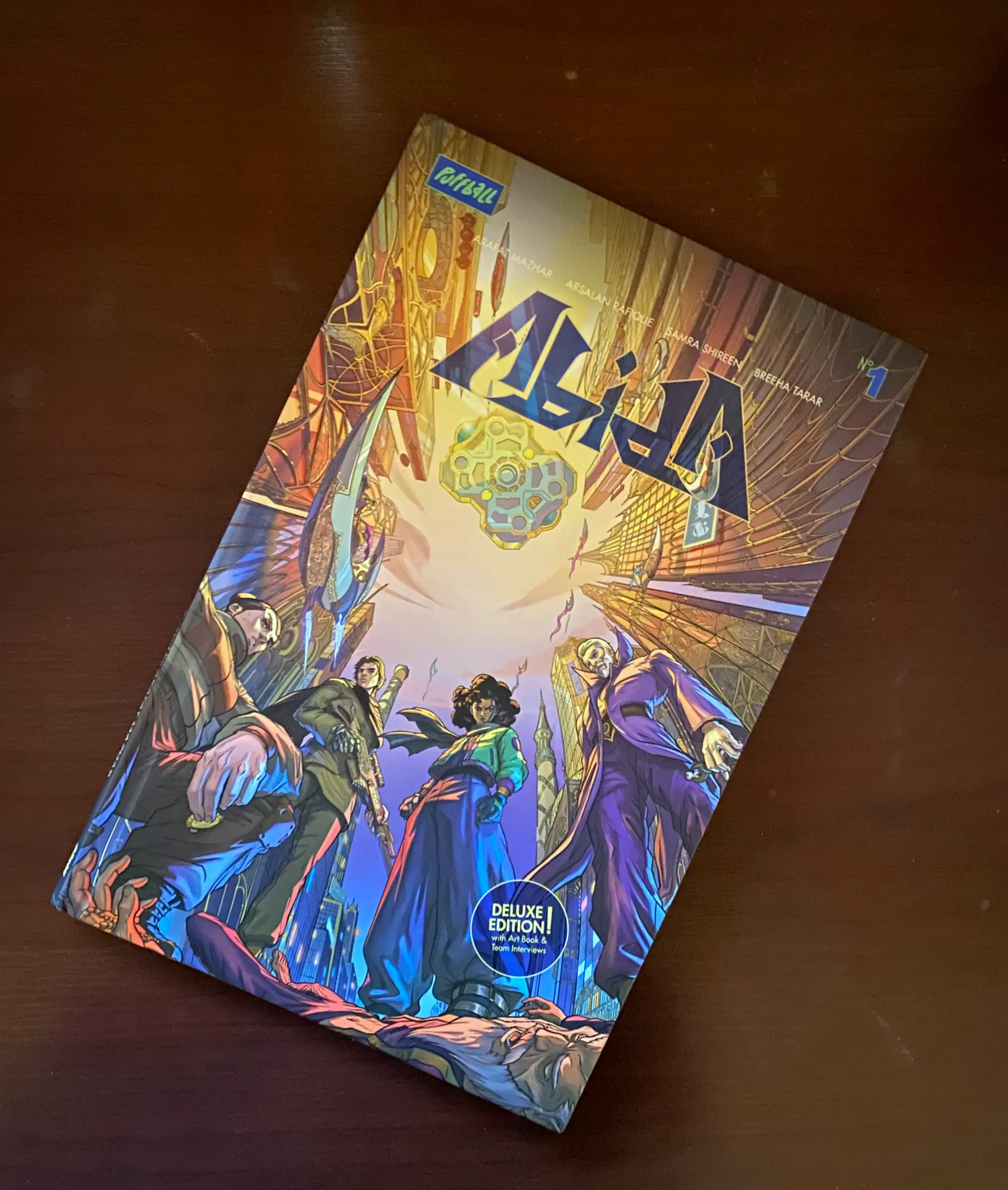
ABIDA is a comic set in a distant future in Multan, where technology has become deeply intertwined with religion, yet fanaticism remains widespread.
Created by a team led by Arafat Mazhar, the comic tells a story of rebellion through striking artwork and a distinctive aesthetic known as “sufi-punk.” According to its creators, the concept combines speculative storytelling with South Asia’s and Islam’s spiritual, cultural, political and technological heritage.
The comic also explores what might happen if today’s social attitudes and power structures continue into an uncertain future. Its world combines futuristic architecture and fashion with traditional cultural elements, blending the familiar with the extraordinary.
Imagine Cyberpunk 2077 set in Pakistan, with Islamic architecture, Urdu neon signs and a society shaped by technology and religious authority.
A Unique Sufi-Punk World
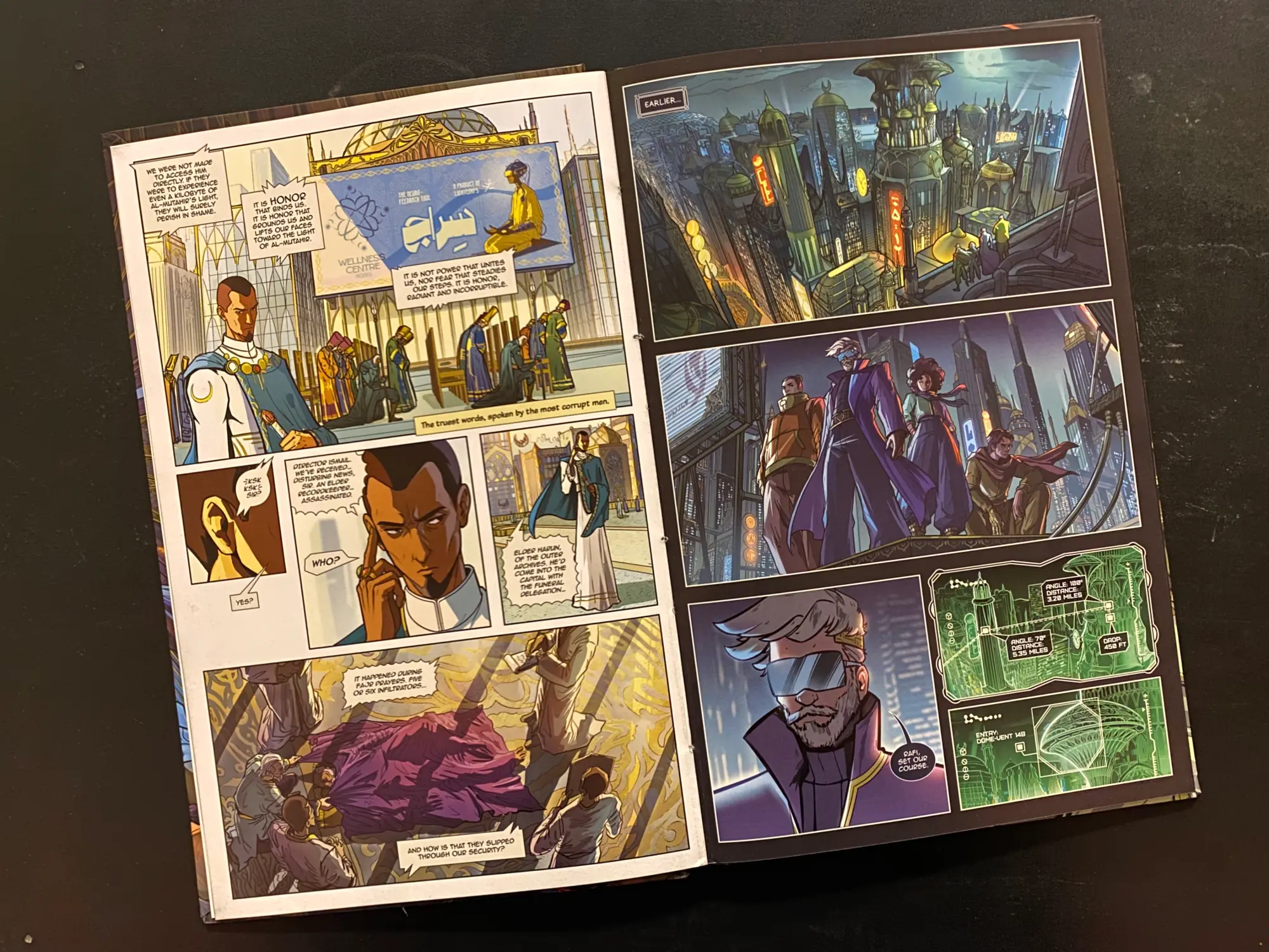
One of ABIDA’s strongest features is its visual identity. The setting feels distinctive compared with familiar cyberpunk worlds such as Blade Runner.
Neon signs appear in Urdu, while skyscrapers feature domes and buildings incorporate geometric patterns inspired by Islamic architecture. Traditional clothing and cultural references also blend with futuristic designs.
This combination gives the comic a recognisable South Asian identity rather than simply reproducing the visual style of Western science fiction.
The first issue also makes a strong impression through its physical presentation. The deluxe edition features a hardbound cover and glossy pages, giving it the feel of a premium graphic novel from major publishers such as Marvel or DC.
Deluxe Edition Offers Concept Art and Interviews
The 76-page deluxe edition costs Rs3,500 and includes interviews with the creative team. It also features concept art showing how the creators developed the sufi-punk aesthetic.
Meanwhile, the standard edition contains 34 pages and costs Rs1,800.
The deluxe version offers additional insight into the creative process, particularly for readers interested in the artwork and world-building behind the comic.
A Future Where Artificial Intelligence Becomes an Object of Worship
At the centre of ABIDA’s story is a society that worships an entity called Al-Mutahir, which appears to be an artificial intelligence.
Its prophecies take the form of digital files stored inside people known as recordkeepers. These individuals have parts of their bodies converted into data-storage systems and are regarded as holy figures.
The titular protagonist and her crew attempt to steal a file from one of these recordkeepers in a carefully constructed data-heist sequence.
The scene recalls elements of Cyberpunk 2077, but it also introduces an inventive approach to decrypting information. Without revealing the details, the sequence establishes an important part of the protagonist’s journey through the wider series.
The premise raises questions about the relationship between technology, religious authority and the power to control information.
Some Artwork Needs Refinement
Despite its strong visual identity, the comic has a few artistic inconsistencies.
In certain panels, characters’ proportions appear distorted. Some arms look unusually elongated and oversized compared with the rest of the body, creating an effect reminiscent of Mr Fantastic.
These issues appear only occasionally, but they stand out against the otherwise impressive artwork.
Still, the overall presentation remains one of the comic’s biggest strengths.
A Promising New Direction for Pakistani Comics
ABIDA offers a fascinating world that leaves room for further exploration. Its cultural influences, futuristic technology and detailed lore make it an intriguing addition to Pakistan’s growing creative landscape.
The setting is particularly compelling because it draws on elements that remain underrepresented in mainstream science fiction. More stories built around sufi-punk or even “desi-punk” could introduce fresh perspectives across comics, games, films and other mediums.
A video game set in a world like ABIDA would also offer exciting possibilities, especially for players seeking an alternative to familiar cyberpunk settings.
The comic was created and written by Arafat Mazhar, illustrated by Arsalan Rafique, coloured by Samra Shireen and lettered by Breeha Tarar.
It also marks Puffball Studios’ expansion into publishing comics through Puffball Comics. The studio has previously worked on several short films, including Sheher-e-Tabassum and Swipe.
With its distinctive aesthetic and ambitious premise, ABIDA offers a promising foundation for a larger fictional universe. Its world is the main attraction, and exploring more of its history, characters and social structures could make future instalments even more compelling.