



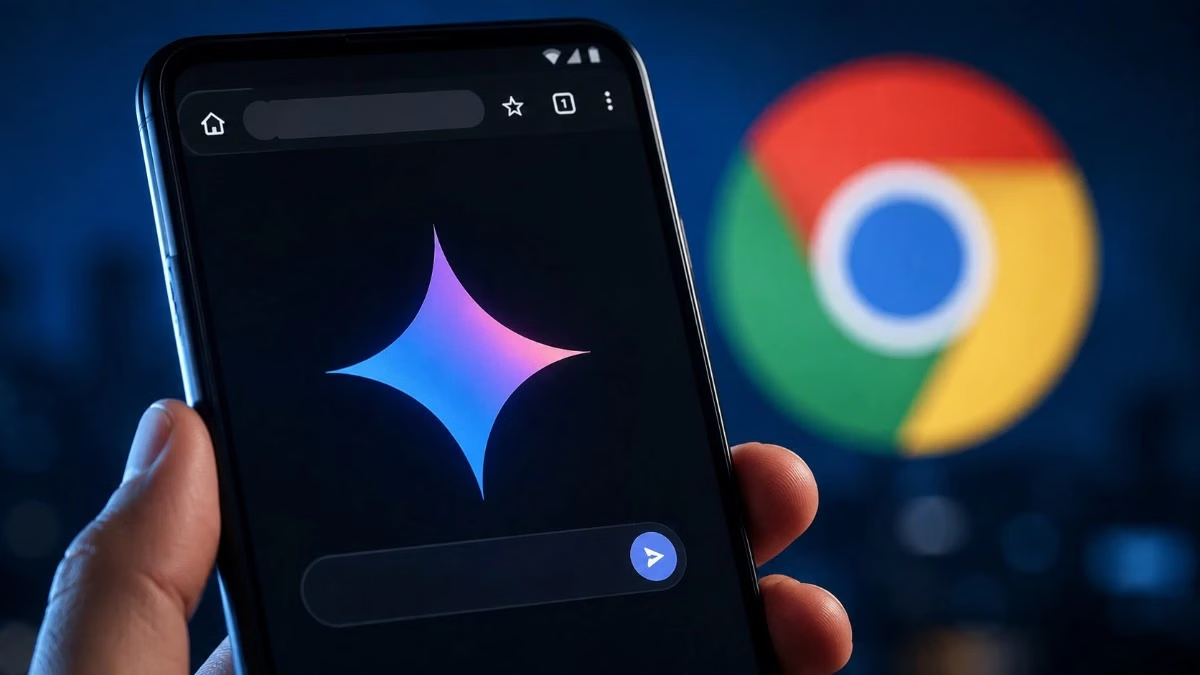
Google is rolling out Gemini in Chrome to Android users across the United States. The update brings deeper AI features directly into the mobile browser.
According to Google, the wider release adds full multimodal Gemini integration to Chrome. Users can summarize pages, generate images, and use a new agentic browsing feature for multi-step web tasks.
Gemini Features in Chrome
Users can open Gemini by tapping the sparkle icon in Chrome’s top bar. They can also access it through the three-dot menu.
Gemini can summarize long web pages, research papers, articles, and recipe blogs. It turns lengthy content into shorter and easier-to-read points.
Users can also ask follow-up questions about the page. This lets them explore information without reading the entire page manually.
Gemini can also connect with Google Workspace apps, including Google Calendar and Google Keep. For example, users can view an event schedule or flight confirmation. They can then ask Gemini to add the information to their calendar or save it as a note.
Gemini also supports image generation through Nano Banana. Users can create and customize images while browsing the web.
Auto Browse Can Handle Multi-Step Tasks
The biggest addition is Auto Browse. This agentic AI feature is currently rolling out to Google AI Pro and AI Ultra subscribers on Android in the United States.
Unlike standard AI tools, Auto Browse can navigate websites and complete multiple steps for users.
Google says it can find and book parking for concerts or sporting events. It can also update recurring online orders and subscription deliveries.
The feature can also research travel options. It can organize information and help users book travel arrangements.
Google Adds Protection Against Prompt Injection
AI agents that interact with websites can create new security risks. Malicious websites could try to hide instructions that trick AI into revealing information or performing unauthorized actions.
This technique is known as prompt injection.
Google says its agentic browsing system includes protections against these attacks. Its models are trained to identify and block potential prompt injection attempts.
Auto Browse also uses confirmation checkpoints. The system pauses before sensitive actions and asks users for approval.
This gives users final control over transactions and personal information.
How to Check for Gemini in Chrome
The feature is currently rolling out to Android users across the United States.
Users can open Chrome on an Android phone or tablet. They should then look for the Gemini sparkle icon in the address bar.
If the icon is missing, users can open the three-dot menu in the top-right corner. They can then check whether Gemini options are available.
Users should also update Chrome through the Google Play Store. The feature is being enabled through a server-side rollout, so it may not appear immediately after updating.