



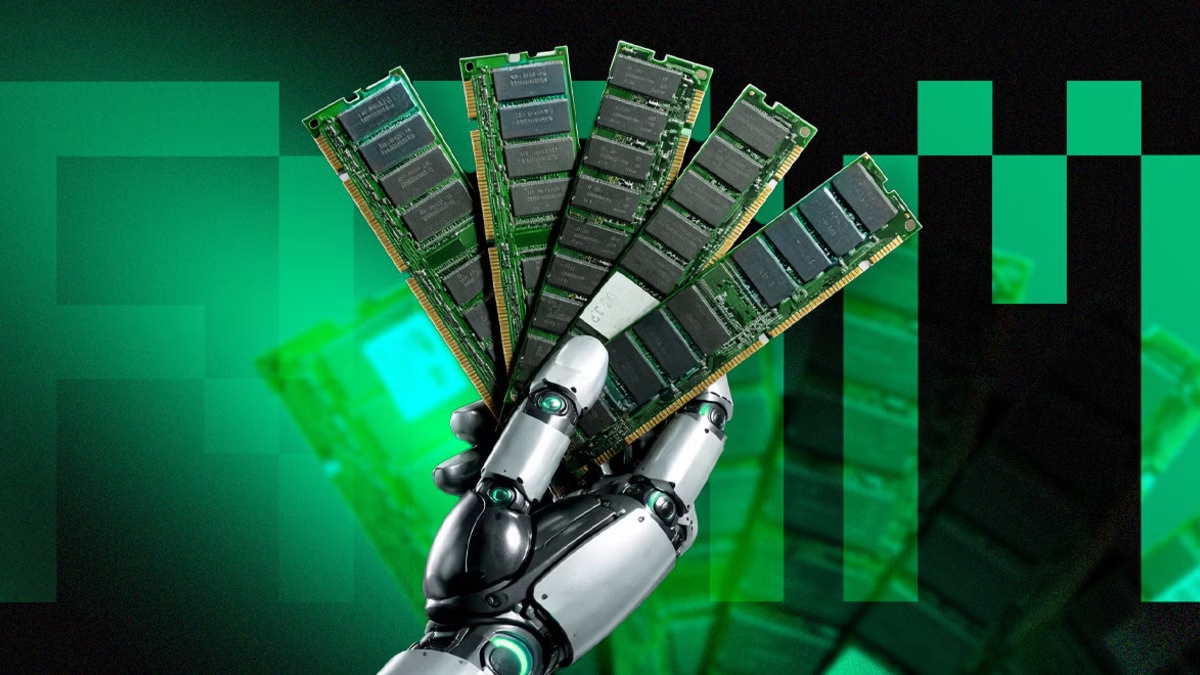
The global memory shortage may continue well into next year. Samsung, SK Hynix and Micron have reportedly already sold their entire planned 2027 DRAM and HBM production capacity.
DigiTimes, citing industry sources, reports that all available capacity from the three major memory manufacturers has been allocated. No additional supply is currently planned. The companies themselves have not confirmed the report.
AI companies lock in future memory supply
A large portion of the capacity has reportedly been secured by AI companies through long-term purchasing agreements.
These agreements effectively allow customers to reserve memory before manufacturers produce it. Some deals cover periods of up to five years.
That creates another problem for consumers. Unless manufacturers add significant new capacity, memory could remain expensive and difficult to obtain for several years.
The shortage covers both conventional DRAM used in PCs, laptops and other electronics, and high-bandwidth memory, or HBM. HBM has become critical for AI accelerators.
SSD prices are also rising
The pressure is not limited to RAM. Demand for NAND flash memory, which is used in SSDs, is also increasing.
NAND capacity has not yet been completely absorbed because more companies manufacture it. However, SSD prices have already climbed considerably over recent months.
The Western Digital SN7100 provides one example. The standard PCIe 4.0 SSD was available for around $110 for 1TB earlier this year. It has since been listed at around $189, representing a substantial increase.
Hardware prices feel the impact
Rising memory and storage costs are already affecting other consumer hardware.
Microsoft increased Xbox Series console prices in August after saying storage and memory component costs had risen by more than 2.5 times. The company also expects those costs to double again by fall 2027.
Valve’s Steam Machine also launched at a higher price than originally expected. Rising memory costs contributed to the increase. The 512GB version eventually arrived at $1,049, well above earlier expectations of less than $750.
If the report about 2027 production proves accurate, consumers hoping for cheaper RAM and storage may have to wait considerably longer for the market to improve.