



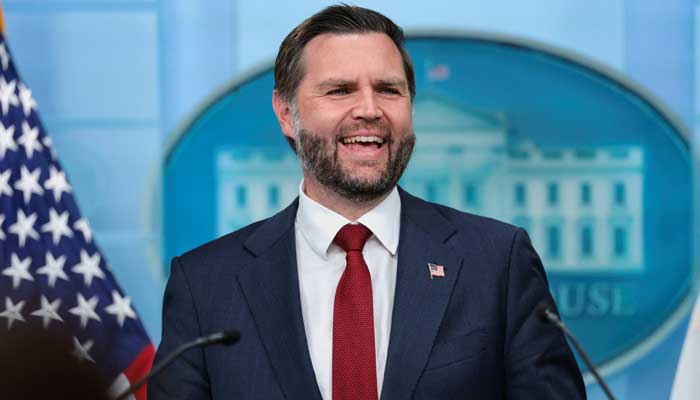
WASHINGTON: US Vice President JD Vance has rejected describing the ongoing conflict with Iran as a war, despite renewed attacks and a growing US military presence in the Middle East.
The comments came as the conflict entered its seventh month, with tensions rising again this week. Washington and Tehran exchanged attacks after a period of relative calm. No diplomatic talks are currently underway between the two sides.
The conflict has also affected President Donald Trump’s approval ratings and pushed up gas prices. The developments could create challenges for Republican candidates ahead of the November midterm elections.
Speaking at the White House, Vance highlighted US efforts to keep oil shipments moving through the Strait of Hormuz. Iranian attacks and disruptions in the area have affected commercial shipping since the conflict began.
Vance said the United States had ended major combat operations against Iran. He argued that the current situation should not be described as a war.
“I wouldn’t call it a war,” Vance said.
He acknowledged that fighting had flared up in some areas but maintained that there was no active shooting at the time of his briefing.
The United States currently has more than 50,000 troops stationed across the Middle East. The Trump administration has also increased its military presence in the region. Nearly 20 warships are reportedly involved in efforts focused on a blockade.
Some US troops have remained in the region longer than expected. Washington has also moved military personnel from Europe and the Indo-Pacific to reinforce its Middle East presence.
Vance said the conflict could only end when Iran stops attacking commercial shipping.
“I think the reality is I don’t know the answer to that question,” he said when asked when Iran would stop attacking ships.
The vice president also ruled out negotiations while Tehran continues to target commercial vessels.
Although the most intense fighting has declined, repeated attacks and the absence of a clear end to the conflict have kept global oil prices high.
On Tuesday, the United States launched air strikes against Iran. Washington said the strikes targeted military sites along the Iranian coast and came in response to Iranian attacks on shipping in the Strait of Hormuz.
The latest escalation pushed oil prices sharply higher, with prices reaching levels not seen since July.
The developments have increased pressure on the Trump administration as it tries to contain the conflict while avoiding a wider regional and global energy crisis.