



UNITED NATIONS: Pakistan has called for reforms to the United Nations Security Council’s (UNSC) veto mechanism, arguing that its misuse undermines the body’s effectiveness and credibility.
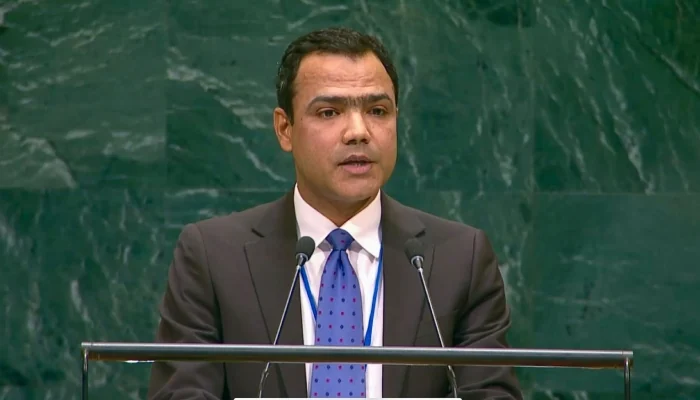
Speaking at the UN General Assembly (UNGA) on Monday, Gul Qaiser Sarwani, Counsellor and Political Coordinator at Pakistan’s UN Mission, said the veto gave the five permanent members unmatched influence across the UN system.
“The misuse of the veto undermines the Security Council’s effectiveness and the credibility of the UN, while giving the permanent five [US, Russia, China, France and UK] unmatched influence throughout the UN system,” he said.
During a debate on the use of the veto, delegates renewed calls to restructure the 15-member Security Council. They stressed the need to make it more responsive to its primary responsibility of maintaining international peace and security.
The meeting took place under UNGA Resolution 76/262, adopted in April 2022. The resolution requires the General Assembly to convene within 10 working days whenever a permanent member casts a veto in the Security Council.
Pakistan Opposes Expansion of Permanent Membership
Sarwani warned that adding more permanent members and expanding veto powers would deepen existing inequalities within the United Nations.
He referred to the campaign by India, Brazil, Germany and Japan for permanent seats on the Security Council. He argued that such expansion could preserve historical privileges, create new centres of power and increase the risk of institutional paralysis.
“Let us be clear: the problems cannot be the solution,” he said.
Sarwani reiterated Pakistan’s opposition to adding new permanent members through the Italy- and Pakistan-led Uniting for Consensus (UfC) group.
“We believe that the veto should be abolished or at least severely restricted; It must not be expanded,” he said.
Pakistan also supported Resolution 76/262, while stressing that any measures to limit or restrain the veto must comply with the provisions of the UN Charter.
Pakistan Proposes Checks on Veto Power
Addressing the Security Council’s ability to block decisions through the veto, Sarwani said Pakistan favoured restrictions on its use or greater representation for elected members.
He argued that increasing the number and role of elected members could help balance the influence of permanent members. Changes to the decision-making threshold could also make the Council more democratic and provide a stronger check on veto power.
Pakistan’s position reflects its broader opposition to expanding permanent membership without addressing the inequalities built into the current system.
UNGA President Urges Council to Act Decisively
Opening the meeting, UN General Assembly President Khalilur Rahman of Bangladesh said the veto initiative had become an established mechanism for transparency, accountability and collective responsibility.
He noted that 21 meetings had been held under the initiative. Rahman also commended the Security Council for submitting special reports to the General Assembly and praised the participation of permanent members in the debates.
He said the United Nations served humanity best when the General Assembly and Security Council operated in balance, with each fulfilling its distinct but complementary responsibilities under the Charter.
Rahman stressed that the Security Council’s effectiveness directly affected people facing conflict, insecurity and humanitarian crises.
When the Council failed to act decisively, he said, the greatest cost fell on those most affected by violence and instability.
He expressed hope that Council members would find the consensus needed to take decisive action for peace, reducing the need for future veto-related debates.
Rahman also urged delegates to ensure that discussions on the veto remained productive rather than becoming repetitive exercises.
“No veto should bring an end to dialogue and diplomacy,” he said, reaffirming the importance of the UN Charter in guiding international efforts to maintain peace.
During the subsequent debate, delegates highlighted the risks associated with a Security Council heavily influenced by veto powers. They also discussed the consequences of decisions made in New York for regions and territories far beyond the Council chamber.