



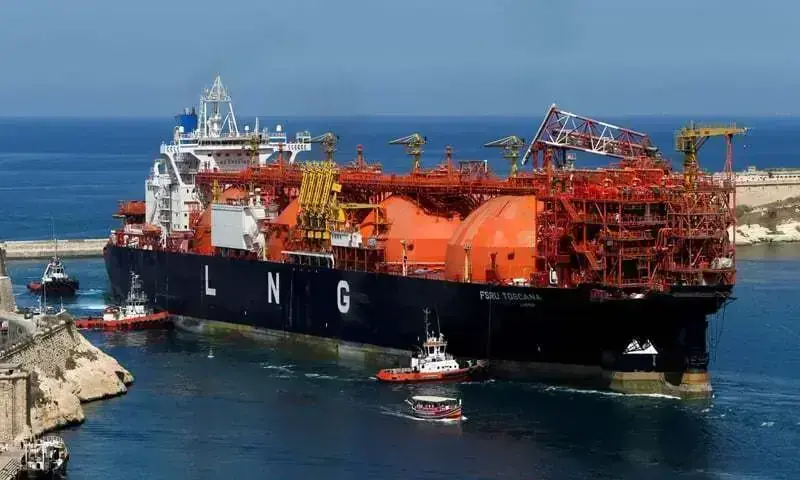
BANGKOK: Pakistan is among the countries most affected by liquefied natural gas (LNG) disruptions following the closure of the Strait of Hormuz.
The country could strengthen its domestic energy supply by increasing its focus on renewable energy, coal and other power sources, according to a Gastech report.
Qatar and the United Arab Emirates supply about 99 per cent of Pakistan’s LNG imports. The fuel is mainly used for power generation, fertiliser production and industrial activities.
LNG accounts for around 30 per cent of Pakistan’s total gas supply, according to the Gastech report, The Outlook for Gas and LNG Markets in Asia.
The report said Asian policymakers may now be reassessing their energy strategies to improve long-term energy security.
It recommended accelerating renewable energy projects, including utility-scale solar, wind farms and commercial rooftop solar. It also highlighted the need for greater investment in energy storage.
Pakistan explores gas storage and LNG options
Meanwhile, Pakistan’s Universal Gas Distribution Company (UGDC) held talks with several international firms at the Gastech conference.
UGDC Chief Executive Officer Ghiyas Abdullah Paracha said the discussions focused on potential gas storage projects, long-term LNG supplies and gas distribution opportunities in overseas markets.
“We have got understanding with some companies that have shown interest in building gas storage facilities in Pakistan,” Paracha said.
He added that several companies had also shown interest in signing long-term LNG contracts with UGDC.
The Gastech report said countries across Asia were also examining ways to increase operating reserves. Such reserves could help power grids respond to unexpected supply disruptions.
It also highlighted the need to expand strategic fuel stocks for transport and power generation.
The report said countries could further explore cross-border electricity trade to manage shortages during supply disruptions.
Energy supply risks
The report said developments in the Middle East and disruptions around the Strait of Hormuz have highlighted the geopolitical risks facing global gas and LNG markets.
It noted that supply disruptions have encouraged Pakistan to consider coal, hydropower and nuclear power as alternative energy sources.
However, the report warned that LNG price volatility and shipping uncertainty could increase power generation costs.
Paracha said UGDC received a stronger-than-expected response from international companies at the conference.
He said the company’s participation was also important because it presented Pakistan’s gas-sector reforms and the opening of the gas market to private-sector participation.
The discussions could help Pakistan explore additional energy supply options and reduce its exposure to future LNG disruptions.