



ISLAMABAD: Pakistan’s latest political confrontation reflects a much deeper struggle over power, legitimacy and constitutional authority.
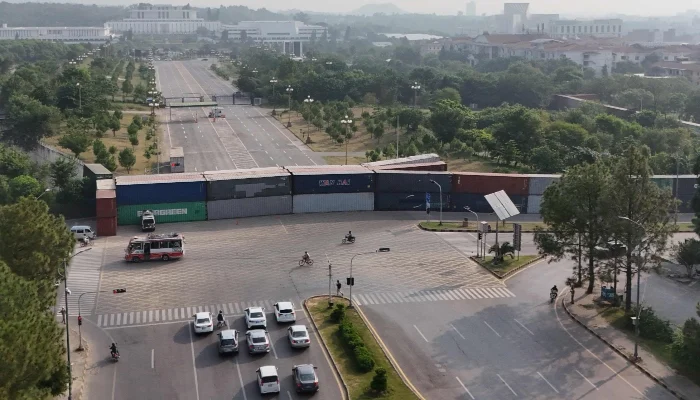
The current tensions include security measures around Islamabad, preventive arrests ahead of the PTI’s planned march and continuing disputes over Imran Khan’s medical care and family meetings.
The government and PTI also remain locked in repeated arguments over political legitimacy, judicial decisions and the right to protest.
However, the roots of Pakistan’s political confrontation go much deeper than the latest dispute.
Pakistan inherited a difficult institutional structure at independence. Its political institutions were still developing, while the civil bureaucracy and military already had strong organisational structures and administrative control.
This created an imbalance between elected political institutions and state institutions with greater organisational strength.
Pakistan’s early political crises, constitutional disruptions and changing political alliances further strengthened this imbalance. At different times, civilian politicians also sought support from unelected institutions against their political rivals.
This history helps explain why constitutional offices have often struggled to exercise the full powers assigned to them.
It does not, however, remove the responsibility of political leaders for their own failures.
Power Must Follow the Constitution
Pakistan’s political system cannot rely only on the possession of power. Legitimate authority also requires public acceptance and constitutional limits.
The 1973 Constitution provides the country’s basic political framework. Its effectiveness, however, depends on institutions respecting its limits.
The judiciary must enforce the law fairly. State institutions must exercise restraint. Political parties must respect constitutional principles even when doing so does not serve their immediate interests.
Citizens and political groups also have responsibilities.
The state must protect people, roads and public property. Political parties must ensure that protests remain peaceful.
One responsibility does not cancel the other. The right to protest does not permit violence, while the need to maintain public order does not remove constitutional rights.
Pakistan’s repeated political crises show the dangers of replacing this balance with the use of force and institutional pressure.
A constitution cannot function properly if political groups defend it only when it benefits them.
Domestic Political Crisis
Pakistan’s political system has repeatedly experienced confrontation between elected governments, opposition parties and powerful state institutions.
The faces may change, but similar patterns continue.
Governments seek to strengthen their authority. Opposition parties challenge their legitimacy. State institutions become involved in political disputes. Courts then face pressure to resolve conflicts that political actors have failed to settle.
This cycle weakens public confidence.
It also shifts political debate away from economic development, education, healthcare and other issues that directly affect citizens.
The continuing polarisation has therefore become a wider national problem.
Pakistan’s External Role
Pakistan’s domestic political difficulties have not always prevented it from playing an important international role.
From the beginning, the country sought strong relations with the Muslim world and an independent voice in international affairs.
Quaid-e-Azam Muhammad Ali Jinnah established many of these principles. Later governments continued Pakistan’s diplomatic engagement despite major regional and global challenges.
Zulfikar Ali Bhutto expanded Pakistan’s diplomatic profile and strengthened relations with Muslim countries. His government also laid the foundations of Pakistan’s strategic nuclear programme.
Nawaz Sharif’s governments focused on relations with India, ties with Muslim countries and economic connectivity.
PPP governments also maintained Pakistan’s diplomatic engagement and international relationships.
Pakistan has therefore often shown greater consistency and effectiveness abroad than it has in managing political differences at home.
However, international influence cannot remain completely separate from domestic stability.
A country can achieve diplomatic and strategic successes while facing political turmoil. Yet long-term strength requires stable institutions and public confidence.
The Need for Political Consensus
Pakistan’s main challenge is not simply deciding who should govern.
The larger issue is how power should be exercised.
Political stakeholders need a clear understanding of constitutional limits and institutional responsibilities. They also need to accept that political competition does not require permanent confrontation.
The state must protect public order while respecting citizens’ rights. Political parties must defend democratic freedoms while accepting accountability for their actions.
Both sides must recognise these responsibilities.
Pakistan can move beyond its current cycle only through stronger institutions, constitutional discipline and political consensus.
Personal rivalries, political revenge and short-term power struggles cannot provide a lasting solution.
The country needs rules that apply equally to governments, opposition parties and state institutions.
Without that balance, Pakistan risks remaining trapped in the same cycle of confrontation.
A stable political system requires more than changing governments. It requires respect for the Constitution, rule of law, institutional restraint and a willingness to resolve political disputes through democratic means.