



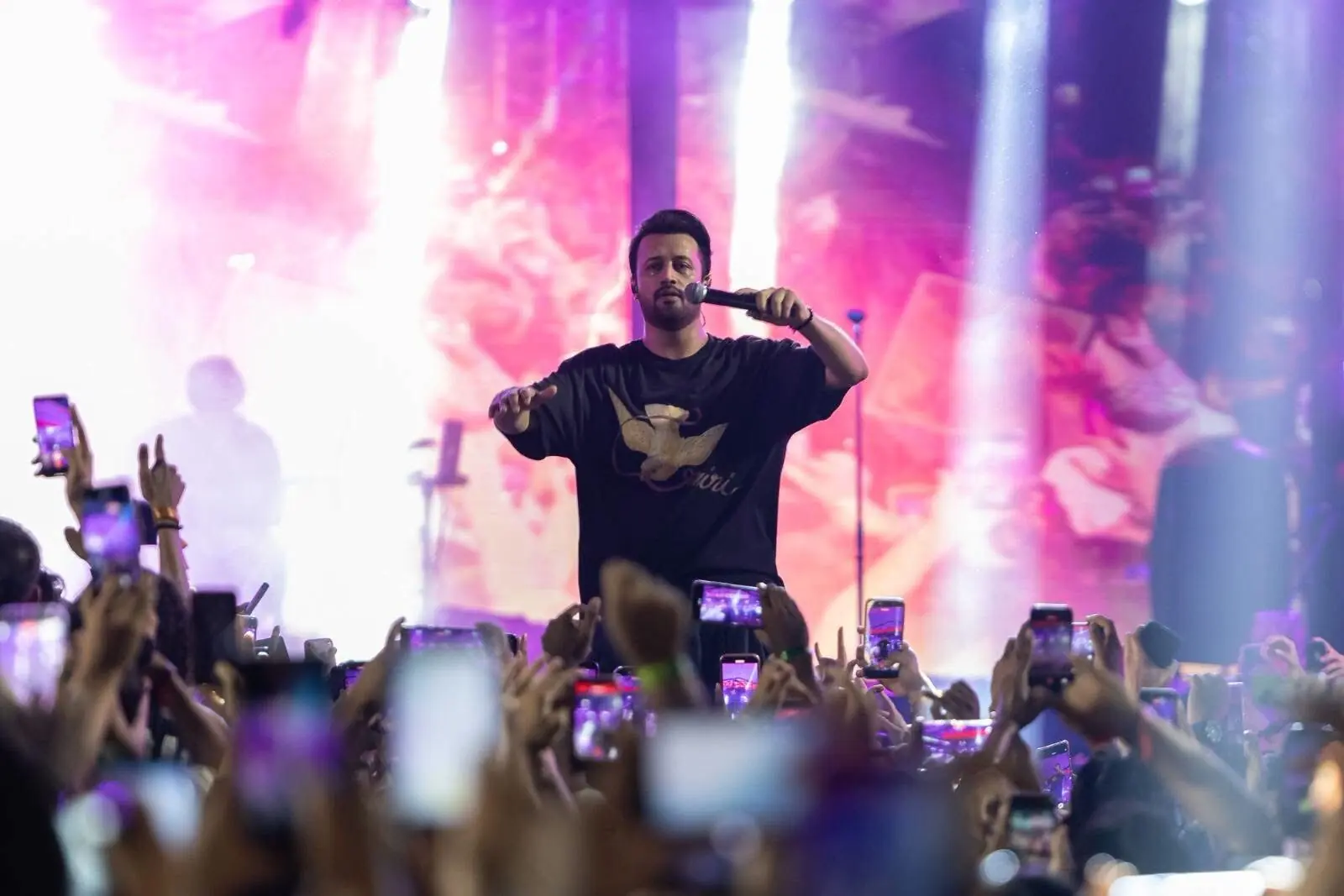
Friday, July 24, 2026, brought heavy rain to Madani Avenue in Dhaka.
By six in the evening, water had pooled in front of the stage. Rain soaked many people in the crowd.
Still, nobody wanted to leave.
Instead, more fans continued to arrive despite the weather.
Among them was 22-year-old Mohammad Alif. He had travelled 109 kilometres from Comilla to watch Atif Aslam perform live.
“I have been listening to Atif Aslam since I was 10,” Alif said. “Seeing him perform in person today feels like a dream.”
At 8:52 pm, Atif Aslam finally stepped onto the stage.
Thousands of fans immediately began chanting his name. “Atif! Atif!” echoed across the venue.
For the next two hours, the audience sang along to hit after hit. The rain and long wait no longer mattered.
For years, young Bangladeshis listened to Pakistani music online. Now, many pay premium ticket prices and travel long distances to see their favourite artists live.
What explains this growing appeal?
Pakistani Music Finds a Growing Audience
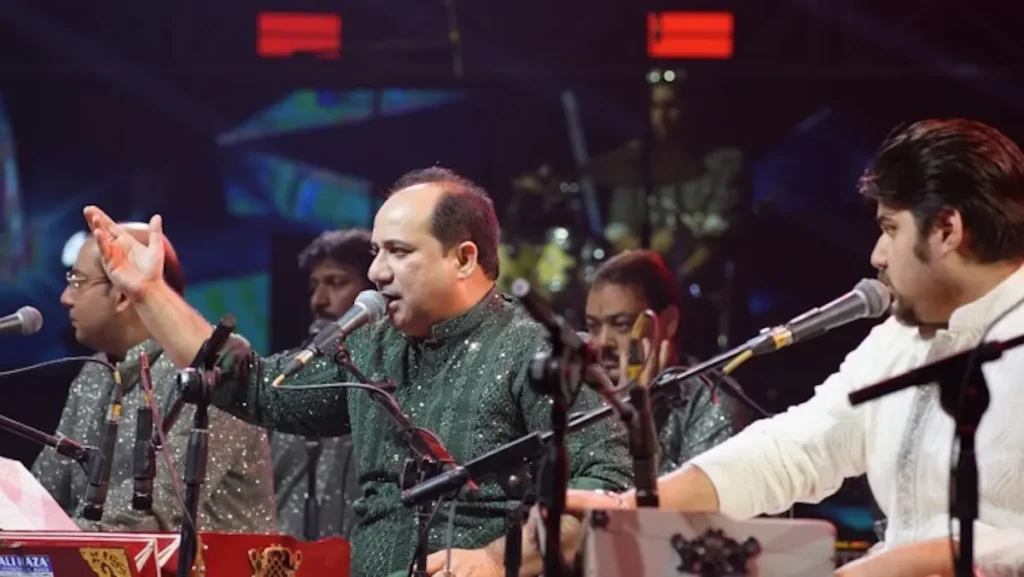
Nineteen-year-old Mushfiqa Jahan also wanted to attend the concert.
However, her family did not allow her to go. Instead, the Jahangirnagar University student followed the event through videos online.
“I regularly listen to Atif Aslam on YouTube,” Mushfiqa said. “His lyrics resonate with my feelings. I really wanted to see him perform in person.”
Alif and Mushfiqa represent thousands of young music fans across Bangladesh.
Pakistani songs have become part of many daily playlists. However, this interest did not emerge overnight.
Young Bangladeshis have listened to Pakistani artists on digital platforms for more than a decade.
For years, their enthusiasm remained limited to personal playlists and online communities. Live concerts were rare.
That situation began to change after 2024.
Improving diplomatic and cultural ties brought more Pakistani artists to Bangladesh. Official exchanges also increased during this period.
From Online Playlists to Live Concerts
Digital platforms built a loyal audience long before large concerts arrived.
Then, Pakistani artists began performing more frequently in Bangladesh.
Direct flights between the two countries resumed in January 2026 after years of suspension.
The return of direct travel made cultural exchanges easier. Concerts also revealed the scale of an audience that had grown quietly online.
Fans who once listened alone could finally gather at live events.
Atif Aslam played a major role in this trend.
He first returned to Dhaka for a concert in April 2024. Later that year, he performed again in November.
The singer also appeared at a university event in December 2025. Most recently, he headlined another major concert on July 24, 2026.
At a Dhaka press conference on July 23, Atif described Bangladesh as his second home.
“I have performed all over the world, but nowhere do I receive the kind of response I get from audiences in Bangladesh,” he said.
More Pakistani Artists Draw Bangladeshi Fans
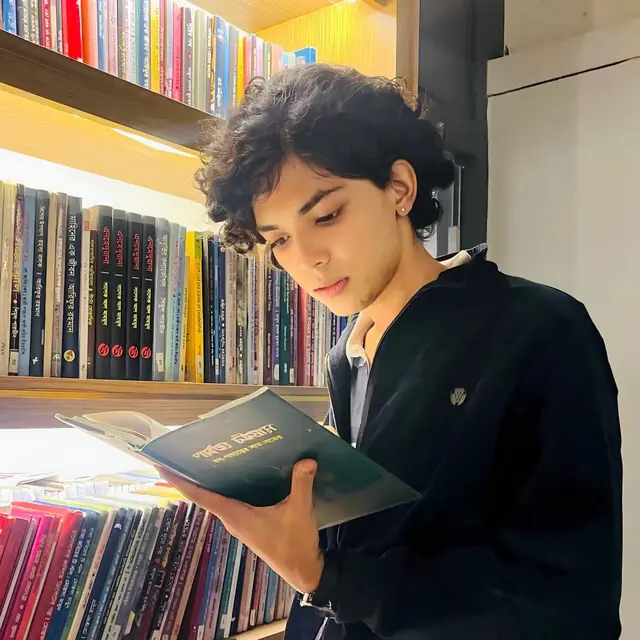
Atif Aslam is not the only Pakistani artist attracting large crowds.
Rahat Fateh Ali Khan performed twice in Dhaka during December 2024.
Pakistani band Jal also returned to Bangladesh after a 14-year gap.
In 2025, Aima Baig, Kaavish and Roxen frontman Mustafa Zahid made their Dhaka debuts.
Abdul Hannan returned to Bangladesh after performing with Atif Aslam in 2024.
Bayaan later held its first concert in Dhaka in 2026.
Murtaza Qizilbash is also set to make his Bangladesh debut in September. Hasan Raheem will perform later this month.
These concerts have become major music events in Bangladesh.
Fans travel from different parts of the country to attend them. Many are also willing to pay relatively high ticket prices.
For young listeners, these events offer more than live music.
They create shared experiences around songs people have followed for years.
Prominent Bangladeshi lyricist and media personality Faisal Rabbikin says this interest is not new.
“Several Pakistani artists have long enjoyed a strong following in Bangladesh,” he said.
He believes easier communication helps cultural exchange grow.
“When communication between countries becomes easier and diplomatic ties improve, cultural exchange naturally expands,” he said.
According to Rabbikin, the growing number of concerts reflects that process.
Digital Platforms Changed Music Discovery
Mohammed Shoeb, an assistant professor at the University of Dhaka’s Department of Music, shares a similar view.
He says Bangladeshis have listened to Pakistani music for decades.
Ghazals, in particular, have maintained a strong audience.
“Earlier, listeners relied on television and radio,” Shoeb said.
Today, digital platforms have changed how people discover music.
Young listeners can easily explore artists from different countries. They can also decide for themselves what they enjoy.
“Digital platforms have made that possible,” Shoeb added.
YouTube and streaming services now give listeners access to music beyond traditional mainstream choices.
As a result, geography plays a smaller role in music discovery.
Why Pakistani Music Appeals to Young Bangladeshis
For many young Bangladeshis, Coke Studio Pakistan serves as an important gateway.
The platform combines folk traditions, qawwali and modern pop.
This musical mix has attracted a large audience on YouTube.
Streaming platforms have also made it easier to discover Pakistani artists.
Twenty-four-year-old Marin Amin has listened to Pakistani music since childhood.
She has attended several concerts by Rahat Fateh Ali Khan and Atif Aslam in Dhaka.
“There’s something different about Pakistani music,” Marin said.
“The way they present their music really appeals to me, and I find it easy to connect with it.”
She believes younger listeners share the same interest.
“Sometimes, when I listen to these songs, it feels as though they are telling my own life story,” she said.
The emotional connection appears to be an important part of the appeal.
Music Quality Remains the Main Attraction
Young Bangladeshi singer Angel Noor believes several factors have increased Pakistani music’s popularity.
Indian films have also helped introduce Pakistani songs to wider audiences, he said.
However, Angel believes quality keeps listeners coming back.
“There’s no reason we shouldn’t listen to Pakistani music,” he said. “The quality of their songs is excellent.”
Pakistani music has also influenced his own creative work.
Angel has added elements inspired by Pakistani music to his upcoming 12-track album.
Pakistani musicians have also collaborated on the arrangements.
“I’ve tried to give my upcoming 12-track album a Pakistani flavour,” he said.
Performances Matter More Than Passports
Mohammed Shoeb believes listeners focus on quality rather than nationality.
“When people listen to a song, they don’t stop to think whether it is Indian or Pakistani,” he said.
Instead, listeners respond to the melody, voice and lyrics.
They also consider how artists present their music.
Shoeb believes Pakistani music offers a distinctive sound. That quality has helped it build a strong following among Bangladesh’s youth.
Faisal Rabbikin sees the trend as part of a broader cultural shift.
Digital platforms have expanded access to international music. Cultural exchanges have also increased.
At the same time, young listeners now have greater freedom to explore different sounds.
“Today’s youth don’t choose music by looking at an artist’s passport,” Rabbikin said. “They simply decide whether a song is good.”
However, he believes cultural exchange should benefit both sides.
Bangladeshi musicians should also get regular opportunities to perform in Pakistan and other countries, he added.
A Dream Come True for Some Fans
That rainy night on Madani Avenue gave Mohammad Alif a moment he had waited years to experience.
After listening to Atif Aslam since childhood, he finally watched the singer perform live.
The journey from Comilla and the heavy rain did not stop him.
For Alif, the concert turned a long-held dream into reality.
For fans like Mushfiqa Jahan, the wait continues.
Yet the growing number of Pakistani concerts suggests that more opportunities may lie ahead.