



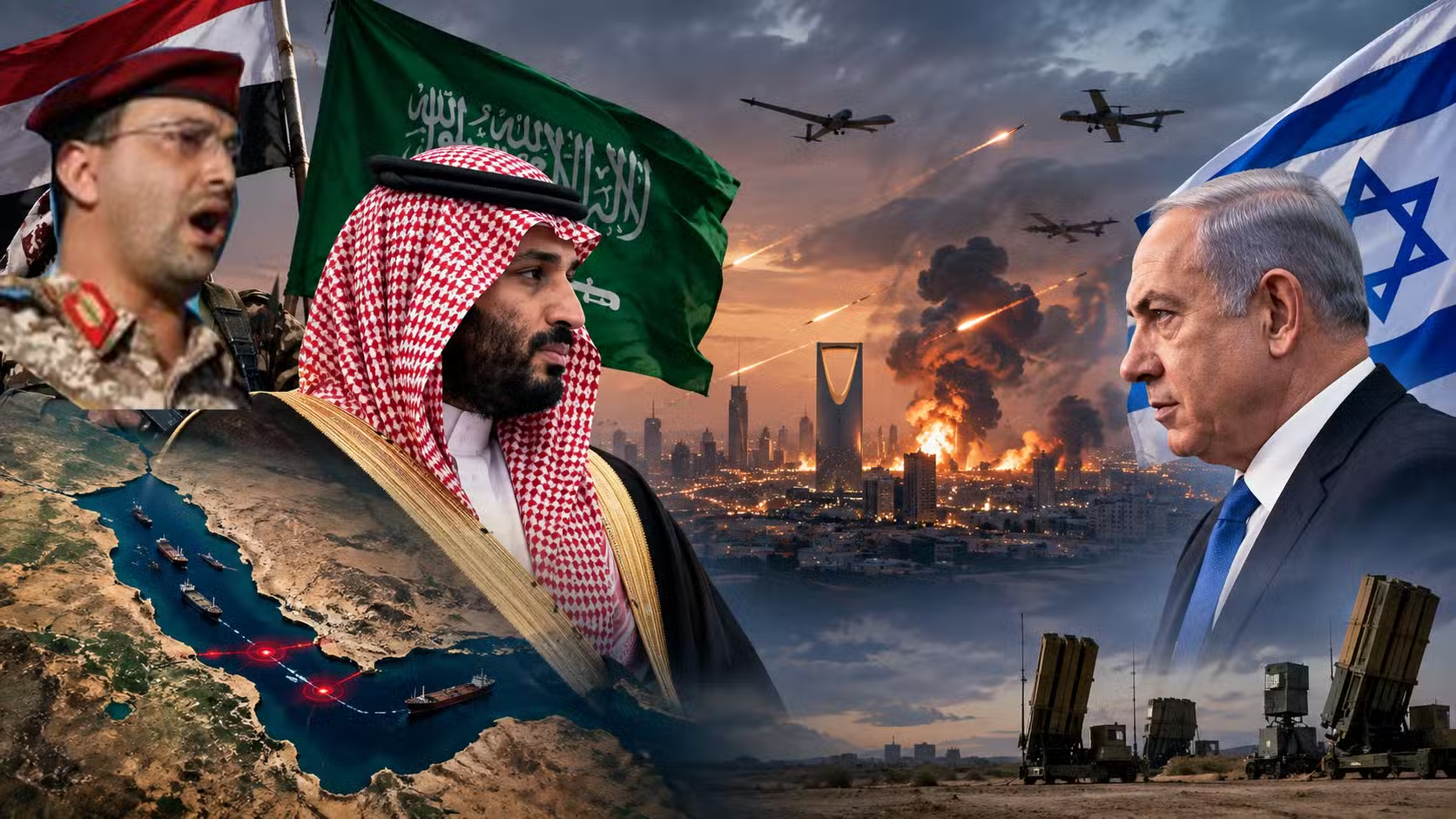
Saudi Arabia is facing a security crisis that could eventually change its regional strategy. The latest Houthi operations have reached Saudi cities, and Riyadh is quickly losing its oil-export routes. To top it all off, Pakistan and Turkey are busy at home so the 2026 Defense Pact looks off the table.
This has put Crown Prince Mohammed bin Salman in a tight spot. ‘How do I get myself out of this mess without bringing Israel closer?’ he must be thinking.
On September 19, Saudi authorities issued the first aerial threat alert for Riyadh since the latest Ansar Allah strikes began. Explosions were reported near the capital’s airport. Earlier, Houthi attacks had hit or threatened areas including Jeddah, Taif, Abha, Khamis Mushait and Jazan.
“The bigger problem is not the missiles and drones. The Saudi regime wants its new defense partners to strike parts of Yemen for face-saving. With the Makkah Defense Pact dysfunctional, Israel could be offered an olive branch,” a veteran historian told ProPakistani in an informal conversastion.
The Houthis have also advanced along the Red Sea and captured the Bab al-Mandeb Strait. Hormuz is blocked at the other end. This creates a strategic problem for Riyadh.
Reuters reported earlier that Saudi Arabia is also seeking additional military assistance from Pakistan, Egypt, France and Britain. None of them has committed to a direct intervention so far.
That brings Israel into the equation.
Israel Fits Here
Israel has extensive help from the United States, particularly with artillery, missile defense, intelligence and drone warfare. Reports this week say Israeli officials are attempting to use the Houthi excuse to push their case for expanding influence near Riyadh.
Saudi Arabia still continues to publicly condition normalization with Israel on meaningful progress toward Palestinian statehood. The Houthi pressure is changing that position.
If Houthi attacks continue to threaten Saudi cities, airports, oil infrastructure and Red Sea shipping, Riyadh may eventually face a choice between maintaining political distance from Israel and accepting deeper Israeli security cooperation.
That could also test Pakistan’s new defense relationship with Saudi Arabia. I will not mention some statements issued by top intelligence agencies in the region but here’s the deal: The defense pact is entering its first and arguably final strategic test.
For Saudi Arabia, the issue is no longer simply Yemen. It is whether the kingdom can secure itself. And if the Houthi presence continues to grow, Israel may increasingly become part of that calculation.