



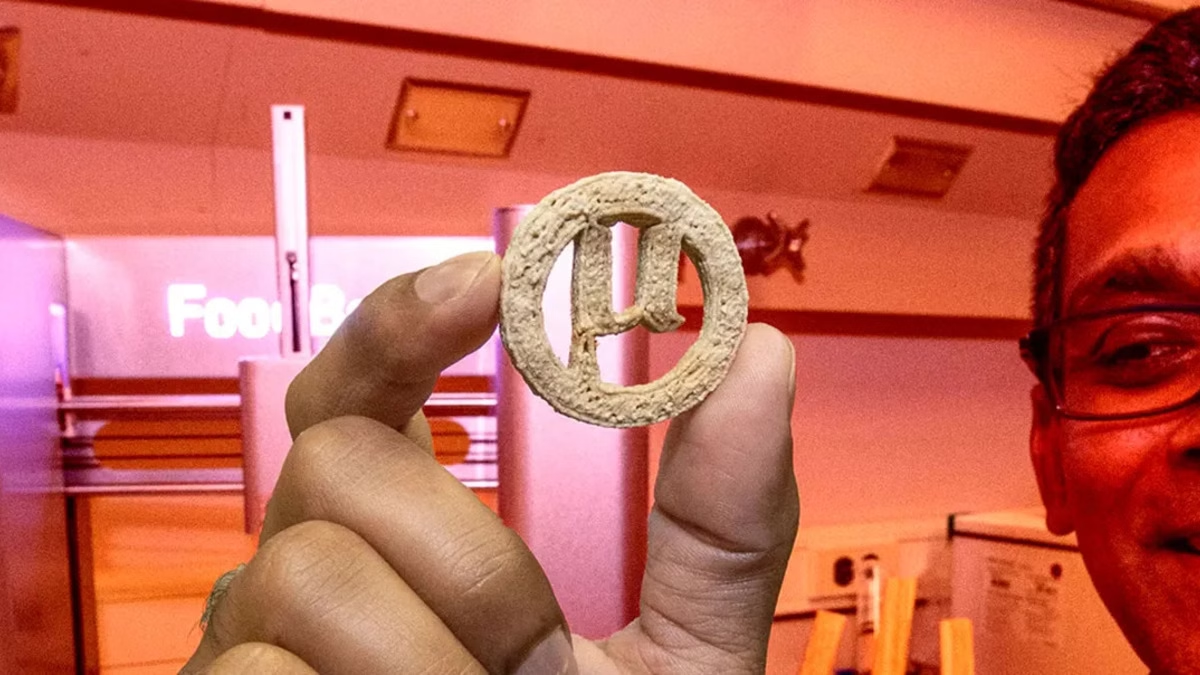
Researchers at Southern Illinois University Carbondale have developed a way to turn plastic waste and plant leftovers into ingredients that can be used to make 3D-printed cookies.
The process uses specially modified yeast to break down plastic and agricultural waste, such as discarded plant stalks. The yeast converts these materials into proteins, fats, acids, and flavorings that can be used in food.
Researchers then mix these ingredients with fiber, starch, and sweetener. The mixture is placed inside a 3D printer, which can print cookies in different shapes.
The team printed small cookies in the shape of a Greek letter and calls them “Bites,” or micro bites.
However, nobody has eaten the cookies yet because the researchers are still waiting for university approval.
Lead researcher Lahiru Jayakody said the cookies have a pleasant smell similar to a real cookie and believes they will also taste good.
How Plastic is Turned Into Food
The researchers used CRISPR gene-editing technology to change yeast so that it could process polyethylene terephthalate, better known as PET plastic.
PET is commonly used in water bottles, food packaging, and clothing.
Before the yeast can process it, the plastic goes through a method called oxidative hydrothermal dissolution. This breaks the plastic into smaller pieces that the yeast can digest.
The process uses heat, water, and oxygen.
The yeast then converts the broken-down plastic into a mixture containing proteins, fats, and acids. Researchers combine this with other ingredients to make it more suitable for food.
One of the modified yeast strains can also turn plant waste into vanilla flavoring.
The Process Is Still Very Expensive
The technology is currently expensive. Producing one kilogram of the cookies costs around $60.
Researchers also do not see the technology as a complete solution to the world’s plastic waste problem.
Around 400 million tons of plastic waste are produced every year.
Jason Hallett of Imperial College London said it would not be realistic to convert all of that waste into cookies and argued that the process is unlikely to become a commercial solution for plastic pollution.
For now, the research mainly shows that plastic waste can potentially be converted into useful food ingredients through biotechnology.