



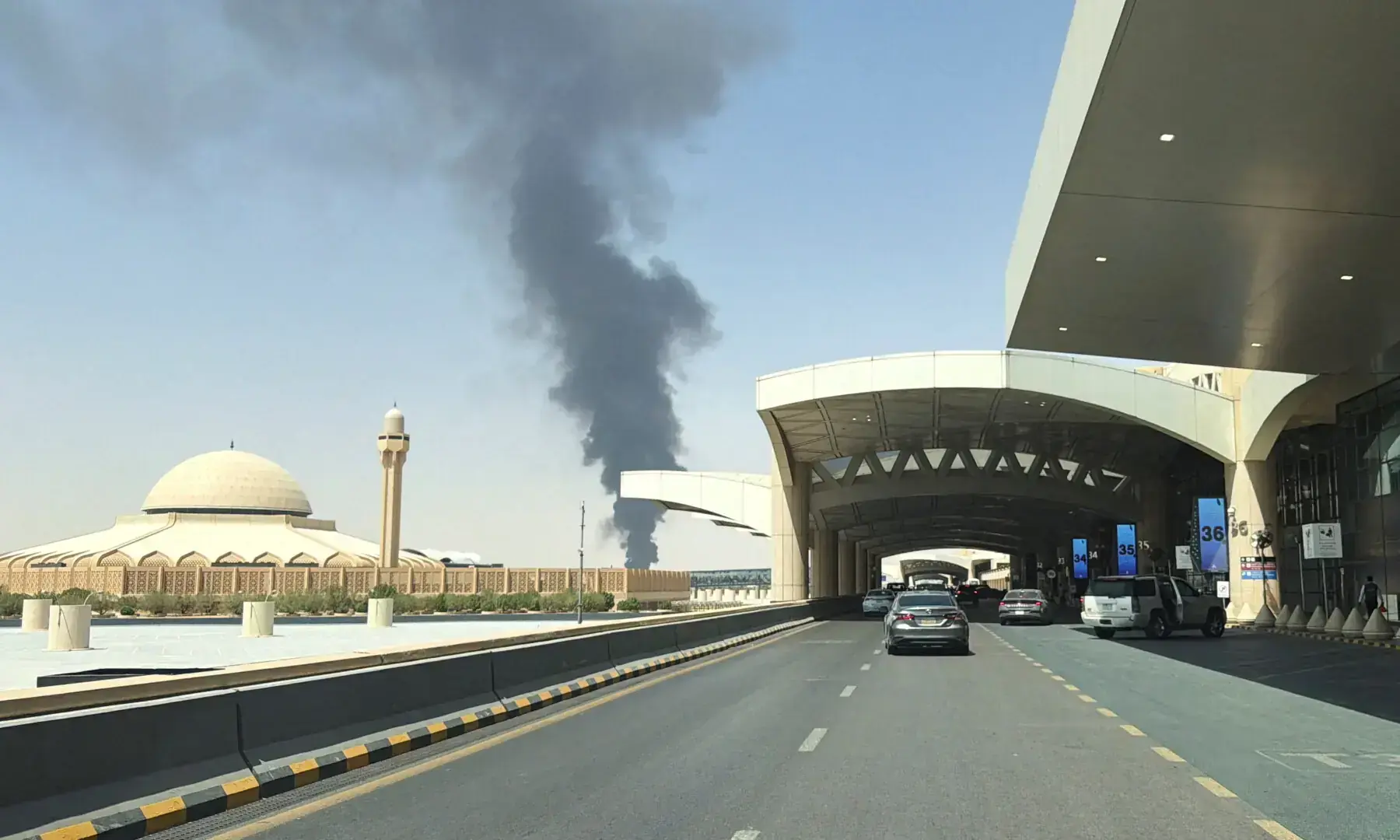
RIYADH: A large plume of black smoke rose near Riyadh’s main airport on Saturday after residents heard explosions and Saudi Arabia issued overnight alerts over a potential aerial threat.
Reuters footage showed a huge column of smoke near King Khalid International Airport. The airport highway, terminal building and other facilities appeared in the foreground.
The exact cause of the smoke remained unclear. Saudi government officials did not immediately comment on the incident.
Meanwhile, FlightRadar24 reported major disruptions at Riyadh airport. The tracking service listed the airport at the highest level of its disruption index, with long delays and several cancelled flights.
Saudi Civil Defence issued alerts overnight for Riyadh and Al-Kharj, east of the capital. Authorities later lifted the alerts and issued an all-clear on Saturday morning.
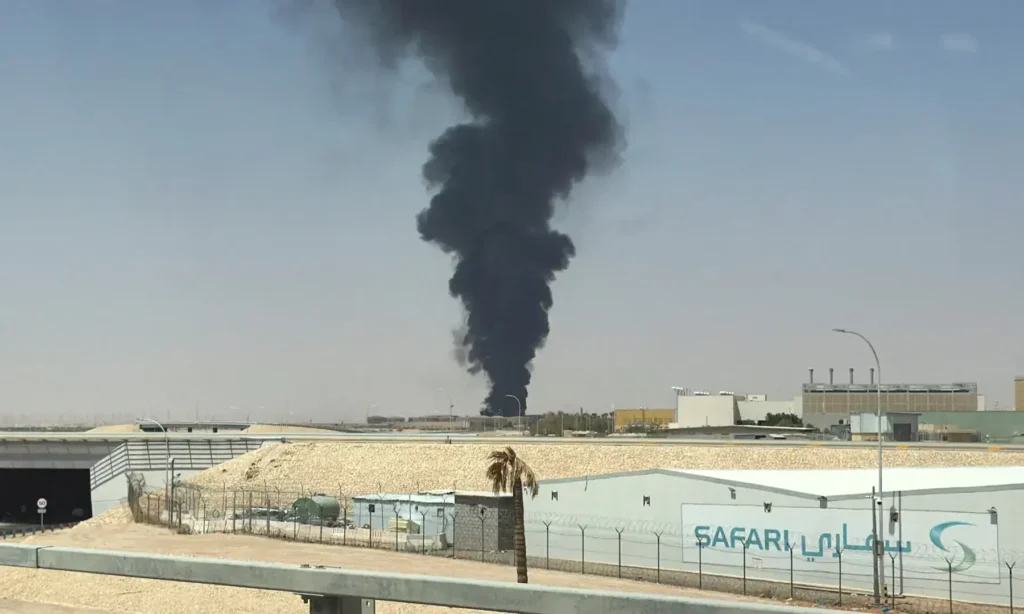
One warning told residents that the area faced a “hostile aerial threat” and urged them to remain indoors. Residents also reported hearing explosions before authorities lifted the alert.
A Riyadh resident told AFP that an alarm sounded before the windows shook. Another resident described the incident as frightening and said the delayed all-clear increased anxiety.
Saudi authorities did not immediately identify the source of the threat. However, the alerts came amid a sharp escalation between Saudi Arabia and Yemen’s Houthi movement.
Houthi Attacks Raise Regional Concerns
The latest alerts marked the first such warnings in Riyadh since the latest escalation with the Houthis began in July, according to Reuters.
The Houthis have launched attacks toward Saudi Arabia since declaring a naval blockade against the kingdom. The group has also targeted Saudi-linked shipping in the Red Sea.
Consequently, the attacks have raised concerns about global energy supplies and international trade. The Red Sea route has become particularly important because the Strait of Hormuz remains disrupted.
Earlier this week, Saudi Arabia accused the Houthis of targeting Makkah. The Houthis rejected the accusation and described it as false.
On Friday, Houthi military spokesperson Yahya Saree said the group had stopped what he called “criminal attempts” in Sanaa. He blamed Saudi Arabia and threatened a response.
The Houthis also say Saudi forces have carried out hundreds of airstrikes against their positions in Yemen.
Meanwhile, the UN Security Council condemned continued Houthi attacks against Saudi Arabia. The council said some attacks had affected civilian and energy infrastructure and injured civilians, including women and children.
The council also condemned the group’s military escalation in Yemen.
Growing Pressure on Oil and Shipping
The conflict has created additional risks for global oil supplies. The Houthis now control much of northern Yemen and parts of the Red Sea coast.
Their advance has increased concerns over the Bab al-Mandab Strait, a major shipping route linking the Red Sea with the Gulf of Aden.
Furthermore, disruptions along the route could affect oil shipments and wider global supply chains. The risks have grown as shipping through the Strait of Hormuz remains severely disrupted.
The United States recently approved a $24.3 billion sale of F-35 fighter jets and related equipment to Saudi Arabia. Washington said the deal would help Riyadh deter current and future threats.
At the same time, the Houthis have strengthened their positions along Yemen’s Red Sea coast. According to reports, the group has installed radar systems and built tunnels in areas under its control.
The renewed fighting has also displaced more than 112,000 people, according to the United Nations. Nearly 3,000 others have crossed the sea to Djibouti.
Yemen Conflict Enters New Phase
The Yemen war began in 2014 when the Houthis seized Sanaa and expanded their control over other areas.
Saudi Arabia later led a military intervention in Yemen in March 2015 in support of the internationally recognised government.
A fragile truce reached in 2022 helped reduce the fighting for several years. However, the latest escalation has brought renewed conflict and increased regional tensions.
The latest incident near Riyadh airport has now added to concerns over the security of Saudi Arabia’s capital, civilian aviation and vital regional transport routes.