



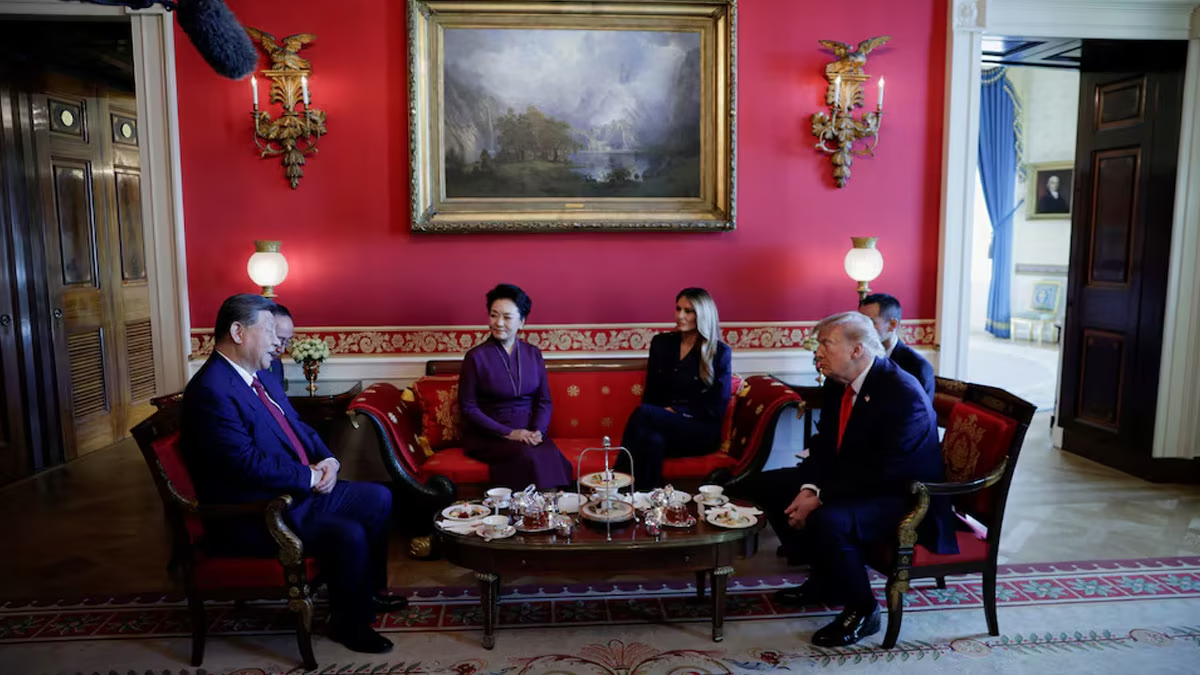
WASHINGTON: The United States and China have agreed on tariff reductions covering $30 billion of non-sensitive goods in each direction and will launch a new dialogue on artificial intelligence following Chinese President Xi Jinping’s visit to Washington.
The agreement was reached during Xi’s three-day summit with US President Donald Trump, which ended on Friday. Xi has since returned to Beijing, according to Chinese state media.
Under the agreement, the United States and China will seek more favourable tariff treatment for selected goods.
US exports covered by the arrangement include agricultural products, fish and seafood, wood products, cosmetics and medical devices. Chinese exports to the US include small appliances, toys, holiday decorations and children’s car seats.
The two countries also agreed to continue the work of their bilateral trade mechanisms and address market access issues through a new agricultural working group.
New Dialogue on AI
Washington and Beijing also agreed to establish a dialogue on the risks and benefits of advanced AI technologies.
The next exchange is expected by November 2026. The two countries will also establish a bilateral communication channel for AI-related incidents.
The White House said the two leaders agreed to use the term “super intelligence” rather than “artificial intelligence” when referring to the emerging technologies covered by the new dialogue.
China also welcomed the terminology and said both sides should increase exchanges as AI technology develops.
The agreement follows earlier discussions between US and Chinese officials on AI safety and emergency communication protocols. The two sides had already agreed to create an incident communication channel for AI-related safety issues.
Trade Truce Extended
The latest agreement comes as Washington and Beijing work to maintain a broader trade truce.
The two sides had extended their existing tariff truce, which was due to expire on November 10, giving negotiators additional time to work on wider trade arrangements.
The US-China relationship has faced repeated tensions over tariffs, critical minerals, market access and technology restrictions.
The latest summit produced measures aimed at maintaining trade and economic communication between the world’s two largest economies.
Cooperation on Global Issues
The United States and China also agreed to support each other as hosts of major international gatherings.
Both leaders intend to attend the Asia-Pacific Economic Cooperation (APEC) and Group of 20 (G20) summits hosted by the other country.
On wider foreign-policy issues, Washington and Beijing agreed that Iran should not develop nuclear weapons.
The two countries also agreed that no country or entity should impose tolls on international waterways.
The latest agreements provide new channels for cooperation on trade, investment and AI while leaving broader differences between Washington and Beijing unresolved.