



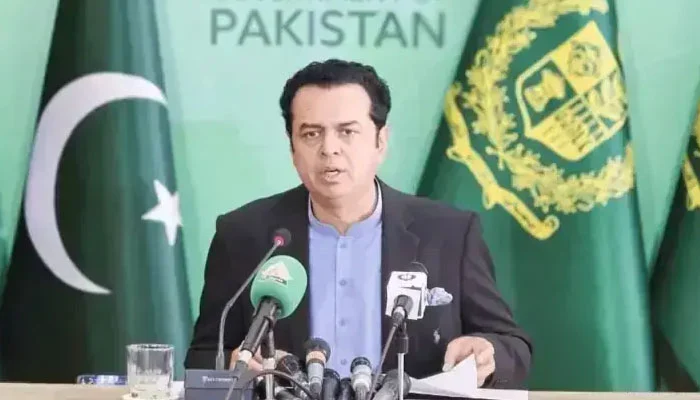
ISLAMABAD: Minister of State for Interior Talal Chaudhry has raised concerns over the Khyber Pakhtunkhwa (KP) Police Act 2026, saying the new law could be challenged in the Supreme Court.
Chaudhry made the remarks on Thursday, a day after the KP cabinet approved the revised police law.
Chief Minister Sohail Afridi chaired the cabinet meeting. The cabinet approved amendments to address reservations raised by members over several provisions of the proposed legislation.
Addressing a press conference in Islamabad, Chaudhry said courts had previously examined issues involving police transfers, postings and the powers of senior police officers.
He said the new legislation could also face legal scrutiny.
According to the minister, the law could affect the police command structure, discipline and morale. He also expressed concern about its potential impact on law enforcement and counterterrorism operations.
Concerns Over Police Command
Chaudhry acknowledged that policing and law and order fall under provincial jurisdiction after the 18th Amendment.
However, he said provincial legislation must remain within the constitutional and legal framework governing the Police Service of Pakistan (PSP).
He argued that provinces do not have unlimited authority to legislate on matters covered by the constitutional framework.
The minister compared the issue with other federal institutions. He said provinces cannot create separate armed forces, railways or naval services.
Similarly, he argued that provincial laws cannot override established PSP rules and principles.
Chaudhry said PSP rules were developed under Pakistan’s federal system and have been upheld by high courts and the Supreme Court.
He said those rules provide the basis for the police command and administrative structure. In his view, provincial legislation cannot simply set them aside.
Changes to Transfers and Postings
The minister said KP police have fought terrorism for many years and made significant sacrifices.
He claimed the new law would not only reduce the authority of the inspector general but could also affect the wider police chain of command.
Chaudhry said powers over the appointment and posting of officers at the rank of DSP and above had previously remained with senior police officials.
Under the proposed changes, he said greater authority would shift to the provincial government.
He specifically referred to officers in grades 17, 18 and 19. According to him, the existing police hierarchy would lose powers over their postings and appointments.
Chaudhry said Chief Minister Afridi already had authority to consult and issue directions regarding transfers and postings.
However, he said such powers had traditionally remained limited to protect the command structure, discipline and morale of the police force.
He warned that concentrating authority over appointments, postings, promotions and other administrative matters could affect independent policing decisions.
Questions Over Senior Police Appointments
Chaudhry also questioned how senior police positions in grades 19, 20, 21 and 22 would be filled if the role of PSP officers was reduced.
He said the province needed clear mechanisms for future recruitment and appointments.
The minister also argued that KP Police face more pressing challenges involving resources, equipment and infrastructure.
He said the force had operated under difficult conditions while dealing with terrorism for nearly two decades.
According to Chaudhry, KP police personnel receive lower salaries than police officers in some other provinces. He also said compensation packages for martyred personnel were lower than those available elsewhere.
Concerns Over CTD Facilities
The minister said the KP Counter Terrorism Department (CTD) had operated from rented buildings despite the province’s long-running security challenges.
He claimed several CTD facilities in rented premises had previously come under terrorist attacks. Those attacks resulted in the deaths of police personnel and civilians, he said.
Chaudhry compared KP facilities with security installations in Punjab.
He said some border check posts in Punjab have protective infrastructure, surveillance systems, bulletproof vehicles and protective equipment.
According to him, such investments can strengthen security and improve operational capability.
The minister said the provincial government remained responsible for providing resources, budgets and operational support to the police.
He argued that strengthening police capabilities should receive priority before changing the force’s command and administrative structure.
Questions Over Police Liaison Committees
Chaudhry also questioned the proposed police liaison committees under the new law.
He asked why similar committees had not been created under the 2017 framework if they were necessary for effective policing.
He further questioned the proposed composition of the committees.
According to Chaudhry, the committees would include members of the provincial assembly but would not include opposition representatives, civil society members, journalists or retired police officers.
The minister said the federal government would continue to examine the matter under the Constitution and applicable laws.
He stressed that KP continues to face significant terrorism-related challenges.
Chaudhry said any changes affecting the police command structure, discipline and morale should therefore receive careful consideration.