



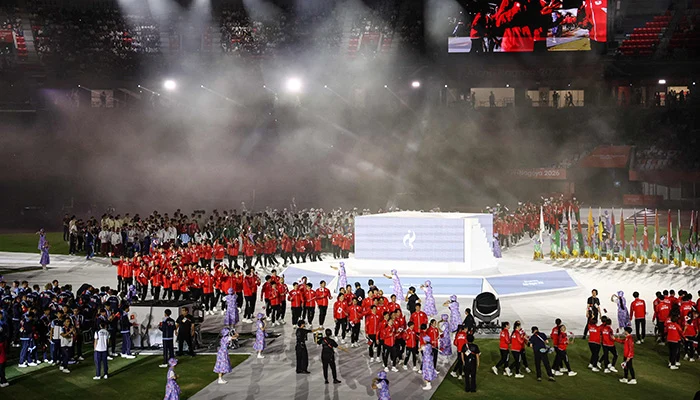
NAGOYA: The 2026 Asian Games in Japan ended on Sunday after two weeks of record-breaking performances, but organisational problems, low attendances and accusations of mismanagement overshadowed parts of the event.
More than 17,000 athletes and officials travelled to Nagoya and Aichi Prefecture for the continent’s biggest multi-sport event.
The Games featured several outstanding performances, led by young athletes who made history.
Young Stars Shine
Chinese swimming sensation Yu Zidi, 13, was one of the biggest stars of the Games.
She won three gold medals, all in Games-record times. Her victories came in the 200-metre butterfly and the 200m and 400m individual medley events.
Yu was also named a Games MVP.
Despite her remarkable performance, the teenager played down suggestions that she was a prodigy.
“I don’t think I am what people describe as a prodigy,” she said.
Japan’s 17-year-old swimmer Shin Ohashi also impressed the home crowd. He broke the men’s 200m breaststroke world record.
In athletics, 20-year-old Thai sprinter Puripol Boonson won both the 100m and 200m events. He was named the men’s MVP.
Organisational Problems Draw Criticism
The Games faced criticism over accommodation and transportation throughout the event.
Organisers did not build a traditional athletes’ village. Instead, participants stayed in temporary wooden units, hotels and the cruise ship Costa Serena.
Officials said the approach was designed to reduce costs and could provide a model for future multi-sport events.
However, some teams complained about cramped rooms and short beds.
The large number of athletes and officials also created a shortage of accommodation.
One Thai Olympic official described the situation as “like musical chairs” while trying to find somewhere to sleep.
Transportation also caused problems.
Some athletes’ buses arrived late or failed to appear. Two teams were reportedly taken to the wrong venue, delaying a volleyball match.
South Korea’s national anthem was also mistakenly played for the South Korean hockey team after organisers had reportedly used the wrong anthem.
Ryu Seung-min, president of the Korean Sport and Olympic Committee, gave the Games a harsh assessment.
“If I were to give them a grade, it would be an F,” he said.
Low Attendance Raises Concerns
Attendance was another major concern for organisers.
The opening ceremony was held with thousands of seats empty.
A women’s football semi-final between hosts Japan and South Korea drew only 998 spectators at a stadium with a capacity of 50,000.
Japan’s Olympic Committee president Seiko Hashimoto acknowledged that the event had faced several problems.
She blamed poor weather for some of the low attendance but said certain sports attracted strong crowds.
Around 30,000 spectators watched South Korea defeat Japan 1-0 to win the men’s football gold medal.
However, the medal ceremony faced another setback when the South Korean flag failed to rise.

Records Continue Despite Setbacks
The sporting action provided several memorable moments despite the organisational issues.
OCA Director General Husain Al-Musallam highlighted the 50 world records broken during the Games.
North Korean weightlifter Ri Song Gum, who stands 140cm tall, set three world records in a single day to win gold.
Cricket also attracted major attention, with India defeating arch-rivals Pakistan in the men’s final.
Japan finished second in the medal table with 83 gold medals. China topped the standings with 169 golds.
Japan also celebrated a historic achievement in esports.
Yuki Kurihara won an esports competition at the age of 11, becoming the youngest champion in Asian Games history.
New Sports Make Debut
Several sports hoping to gain Olympic recognition made their Asian Games debuts.
They included padel, mixed martial arts and virtual taekwondo.
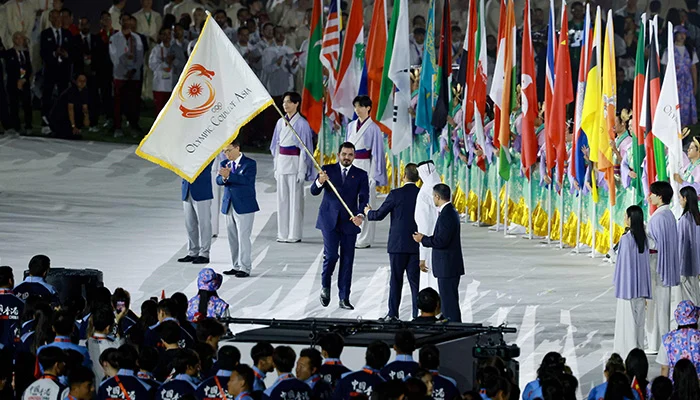
The closing ceremony featured music, colour and performances before Japan officially handed hosting duties to Doha, which will stage the 2030 Asian Games.